Harmony Commission Achieves Perfect Unity on Single Issue: Inability to Agree on Anything Else
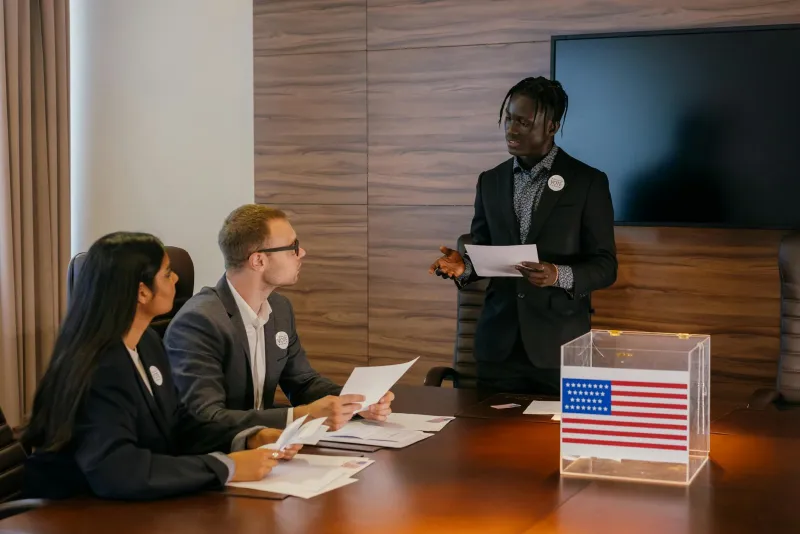
A Monument to Collaborative Dysfunction
The National Commission on Political Unity delivered its highly anticipated final report Tuesday, a 487-page masterpiece titled "Bridging the Divide: A Roadmap to American Reconciliation" that commission members universally describe as "absolutely terrible" and "completely misses the point."
The bipartisan panel, established in 2021 with great fanfare and a $4.7 million budget, spent three years studying America's political polarization problem before discovering they had become a perfect case study of the very phenomenon they were meant to solve.
"I'm proud to say we've achieved something truly remarkable," announced Commission Chair Senator Susan Collins during the final press conference. "We've created the first bipartisan document that both parties can agree is completely partisan."
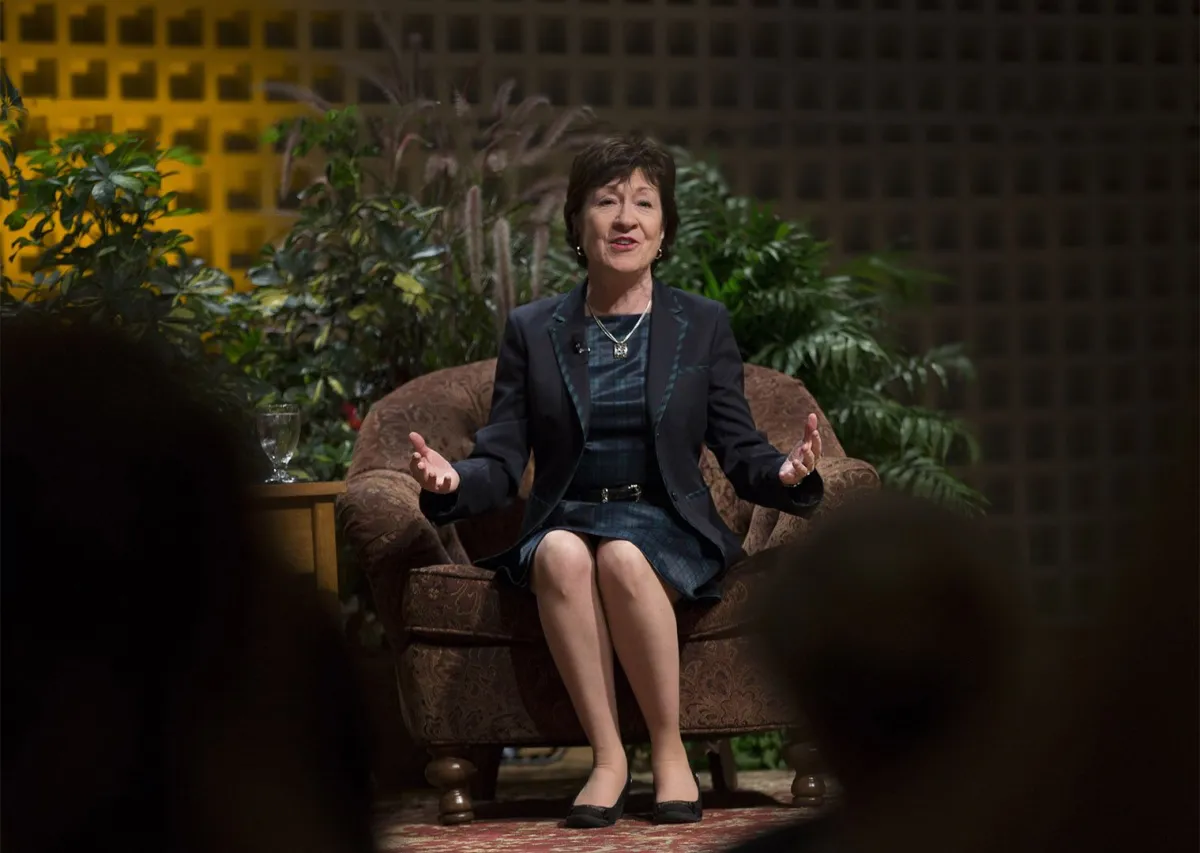 Photo: Senator Susan Collins, via www.bates.edu
The Art of Diplomatic Warfare
The commission's work was marked by what participants diplomatically termed "vigorous intellectual exchange," though meeting transcripts reveal more prosaic disputes over everything from the conference room temperature to whether the word "bipartisan" should appear in the report's title.
"The Democrats wanted it to say 'Bipartisan Commission Report,'" explained Republican member Rep. Dan Crenshaw. "We felt that was too partisan. They said calling it partisan was partisan. We said calling us partisan for calling them partisan was partisan. It went on like that for six weeks."
The deadlock over the title was eventually resolved through what commission members describe as "creative compromise": the final report features seventeen different titles, each reflecting a different member's vision of what the commission was supposed to accomplish.
Breakthrough in Breakdown
The commission's most significant achievement may have been documenting, in real time, exactly how political division manifests in practice. Meeting minutes reveal escalating conflicts over increasingly trivial matters, including a three-day argument over whether the commission's coffee should be served in red, blue, or purple cups.
"We ended up with clear cups," noted Democratic member Rep. Hakeem Jeffries. "It was the only solution that everyone could hate equally."
The commission's working groups became microcosms of national political dysfunction, with the Subcommittee on Civil Discourse suspending meetings after members began communicating exclusively through strongly worded press releases.
Expert Testimony Gone Wrong
The commission's public hearings featured testimony from leading experts on political polarization, though these sessions often devolved into disputes over whether the experts themselves were too polarized to offer credible testimony.
"We had Dr. Jennifer McCoy from Georgia State University, a renowned expert on democratic breakdown," recalled Commission Vice Chair Rep. Liz Cheney. "But then we spent four hours arguing about whether Georgia State University was in a red state or a blue state, and whether that affected her credibility."
 Photo: Georgia State University, via diplomaartworks.com
The expert testimony phase was ultimately suspended after commission members could not agree on whether political science was a legitimate field of study, with one member demanding equal time for what he termed "alternative political theories."
The Report Nobody Wanted
The commission's final report represents what members describe as "aggressive compromise," featuring contradictory recommendations that somehow manage to satisfy nobody while offending everyone.
Key findings include the groundbreaking observation that "Americans disagree about things," the revolutionary insight that "political parties have different priorities," and the stunning conclusion that "solving polarization is complicated."
"The report perfectly captures our findings," explained Democratic member Sen. Chris Coons. "We discovered that bipartisan cooperation is impossible, especially when you're trying to cooperate on a bipartisan basis."
Implementation Challenges
The commission's recommendations face immediate implementation challenges, primarily because commission members cannot agree on what they recommended or whether their recommendations were any good.
"I think the report suggests we need more dialogue," said Republican member Rep. Brian Fitzpatrick. "But Senator Warren says it recommends less dialogue. And honestly, after three years of dialogue about dialogue, I'm not sure dialogue is the answer."
The report's 47 specific recommendations include contradictory advice such as "increase bipartisan cooperation" and "accept that bipartisan cooperation may be impossible," leading several observers to describe it as "refreshingly honest about its own uselessness."
Unintended Success
Despite its apparent failure to heal America's political divisions, the commission may have achieved something more valuable: providing a perfect demonstration of how those divisions actually work in practice.
"This commission is the most accurate representation of American politics I've ever seen," observed Dr. Sarah Binder, a political scientist at George Washington University. "They've created a living laboratory of political dysfunction, complete with detailed documentation of every petty argument and procedural dispute."
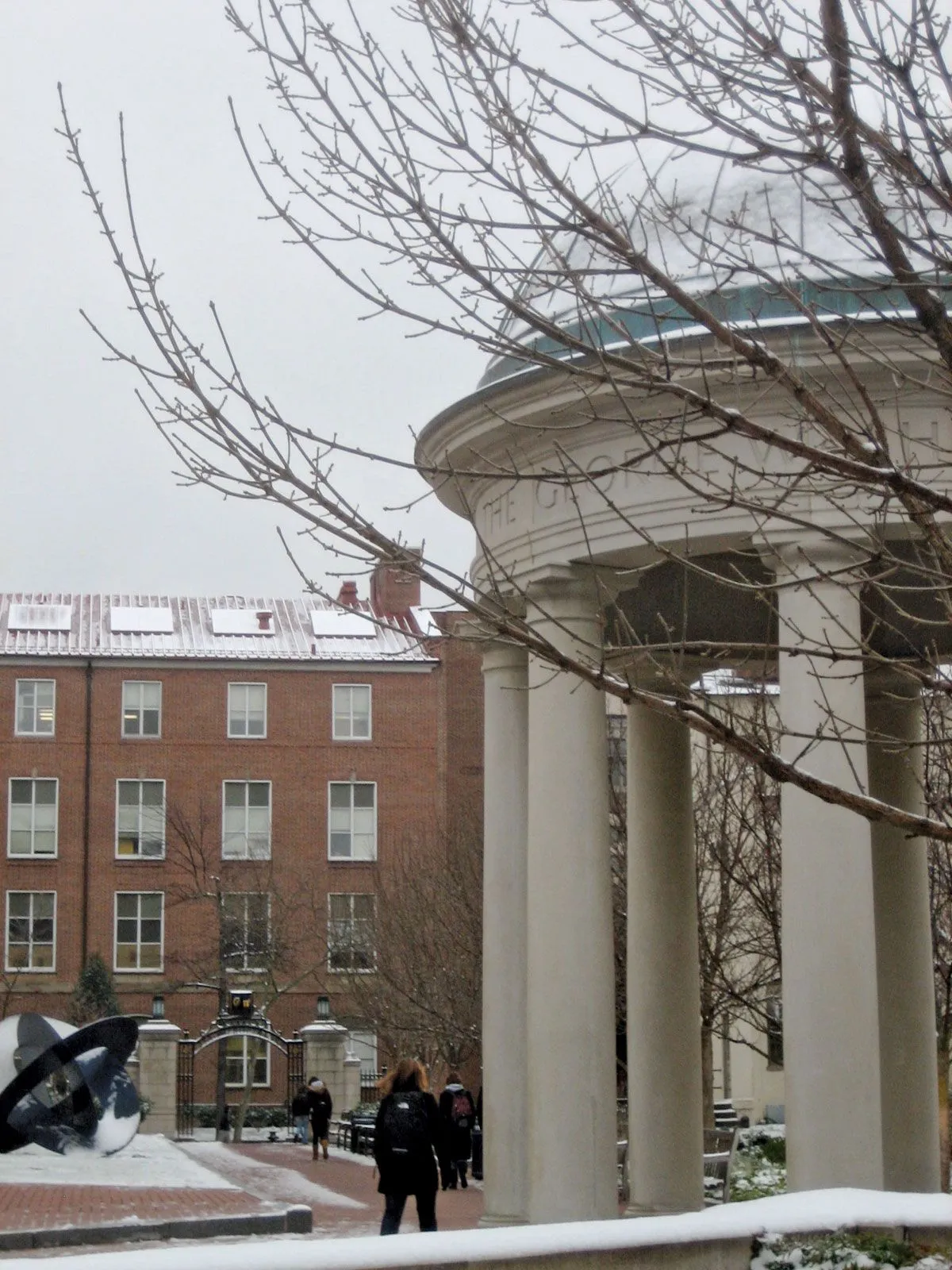 Photo: George Washington University, via cdn.britannica.com
The commission's meeting transcripts, which total over 2,000 pages, have already been optioned by Netflix for a limited series tentatively titled "How Not to Save Democracy."
Legacy Planning
In their final unanimous vote, commission members agreed to establish a follow-up body called the Commission on Commission Effectiveness, which will study why the original commission was ineffective and make recommendations for more effective commissions in the future.
However, this decision immediately sparked controversy when members could not agree on whether the new commission should be bipartisan, nonpartisan, or what one member termed "post-partisan," a concept that nobody could define but everyone agreed sounded important.
"We're already arguing about the follow-up commission," admitted Chair Collins. "Which proves our original point about political division, so in a way, we've succeeded."
The Commission on Political Unity will formally disband next month, though members plan to continue disagreeing about their work through competing op-eds, dueling book deals, and what promises to be a contentious final group photo session.
As of press time, commission members remained deadlocked over whether to consider their work a success or failure, though they unanimously agreed that whatever it was, it was definitely the other party's fault.