House Unanimously Declares Opposition to Bad Things, Celebrates Rare Display of Functional Democracy
Historic Consensus Achieved
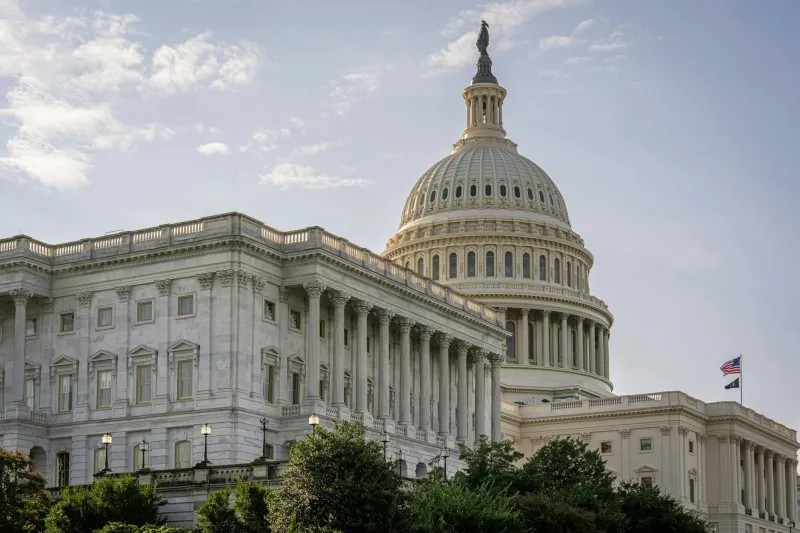
The United States House of Representatives made history yesterday by passing Resolution 2847, formally condemning "the general concept of badness" in a unanimous vote that left political observers struggling to remember the last time Congress agreed on literally anything. The non-binding resolution, which took six months to draft and cost approximately $340,000 in committee hearings, establishes that bad things are "not good" and that good things are "preferable to bad things."
 Photo: United States House of Representatives, via image.shutterstock.com
"This represents exactly the kind of bold, decisive action the American people sent us here to take," declared House Speaker Margaret Chen during a victory lap press conference. "When something is universally despised, we will not hesitate to despise it as well. That's leadership."
 Photo: Margaret Chen, via urbanstudies.brussels
A Comprehensive Archive of Uncontroversial Positions
Resolution 2847 joins an impressive collection of congressional achievements from recent years, including Resolution 1829 ("Expressing the sense of Congress that puppies are generally adorable"), Resolution 2156 ("Condemning the practice of stealing lunch money from children"), and the landmark Resolution 1743 ("Affirming that ice cream tastes good on hot days").
The most celebrated recent triumph was Resolution 2634, which formally acknowledged that water exhibits wetness properties under standard atmospheric conditions. That resolution passed 434-1, with the sole dissenting vote coming from Representative Dale Morrison of Utah, who later explained he was "concerned about federal overreach into the molecular sciences."
"We've really hit our stride," explained Representative Jennifer Walsh of Oregon, chair of the House Subcommittee on Obvious Truths. "Last session alone, we successfully condemned child abuse, endorsed the concept of happiness, and passed a strongly worded statement against the existence of suffering. The American people deserve to know where their representatives stand on these critical issues."
The Bipartisan Miracle
Political scientists have struggled to explain how Congress consistently achieves unanimous agreement on resolutions that accomplish nothing while remaining bitterly divided on actual legislation. Dr. Patricia Hendricks of Georgetown University's Center for Democratic Processes suggests the phenomenon represents "a fascinating case study in performative governance."
 Photo: Georgetown University, via bses.georgetown.edu
"It's remarkable," noted Dr. Hendricks. "These lawmakers can't agree on basic infrastructure spending, but they'll unanimously condemn hunger, poverty, and sadness with the kind of passionate intensity usually reserved for naming post offices after local heroes."
The secret, according to House Majority Leader Thomas Richardson, lies in careful issue selection. "We've developed a rigorous vetting process," he explained. "If more than three people in America might conceivably support something, we won't touch it. But if it's something universally despised—like stepping on puppies or putting pineapple on pizza—we can move with lightning speed."
Strategic Messaging Excellence
Republican leadership has praised the resolution as evidence of their commitment to family values, while Democrats have hailed it as a victory for social justice. Progressive caucus member Alexandria Martinez noted that condemning badness "sends a clear message that we stand with good things," while conservative stalwart Robert Chen emphasized that the resolution "reaffirms our nation's founding principle that bad stuff is bad."
"This is exactly why I ran for Congress," explained freshman Representative David Park of Nevada. "To take bold stands against things that literally everyone already opposes. It's what the Founders would have wanted."
Implementation and Enforcement
While the resolution carries no legal weight and requires no funding, House leadership has announced plans to establish a Select Committee on Badness Monitoring to ensure the resolution's principles are properly upheld. The committee will be tasked with identifying new forms of badness that Congress might consider condemning in future sessions.
"We can't rest on our laurels," warned Representative Chen. "Bad things are constantly evolving, and Congress must stay ahead of the curve. Who knows what terrible new phenomena might emerge that require our immediate and unanimous condemnation?"
Early candidates for future resolutions include a proposed condemnation of "stepping on LEGO blocks while barefoot" and a sense-of-Congress statement affirming that "traffic jams are inconvenient."
Public Response and Expert Analysis
Citizen advocacy groups have responded with cautious optimism. "It's encouraging to see Congress taking such a firm stance against things we all hate," said Maria Gonzalez of the Coalition for Obvious Policy Positions. "Now if they could just apply this same energy to, say, healthcare or climate change, we might really get somewhere."
Political veteran Senator Harold Morrison, who has served in Congress for thirty-four years, provided historical context: "I've seen a lot of meaningless gestures in my time, but this one really stands out for its complete lack of controversy. It's the kind of achievement that reminds you why we have a democracy in the first place."
As Congress prepares to tackle next month's agenda—which includes potential resolutions condemning "being mean to elderly people" and "forgetting to say please and thank you"—lawmakers remain optimistic about their ability to continue finding common ground on issues that require no actual governing.
"The American people can count on us," concluded Speaker Chen. "When something is universally terrible, we'll be there to say so. Loudly, unanimously, and at considerable taxpayer expense. That's the promise of representative democracy."