Defense Department Announces Groundbreaking New Framework to Clarify Its Last Framework That Explained the Framework Before

Revolutionary Clarity Initiative Launched
The Department of Defense has proudly announced the completion of its latest strategic masterpiece: the "Integrated Multi-Domain Operations Framework Clarification Document," a sweeping 847-page explanation of why the previous 623-page "Future Force Integration Strategy" needed clarification, which itself was designed to illuminate the earlier "21st Century Warfighter Vision," a document that famously required its own 400-page appendix to explain what "21st Century" meant.
"This represents a quantum leap in our ability to articulate what we've been trying to say for the past thirty-seven years," explained Deputy Assistant Secretary for Strategic Communication Clarification Jennifer Walsh-Henderson, speaking from the newly constructed Pentagon briefing room specifically designed for announcing new strategic frameworks.
A Rich Heritage of Explanation
The latest document traces its intellectual lineage back to 1987's groundbreaking "Defense Reform Initiative," which promised to make the military "leaner, more agile, and significantly less likely to purchase basic office supplies at prices that would make a luxury yacht dealer blush." That initiative spawned the 1993 "Bottom-Up Review," which in turn generated the "Quadrennial Defense Review," leading to the "Defense Transformation Initiative," followed by the "Force Structure Review," and culminating in last year's "Integrated Deterrence Framework," which required immediate clarification due to what officials termed "insufficient integration of the integration concepts."
"Each strategic document builds upon the foundational wisdom of its predecessors," noted Dr. Marcus Pemberton-Smythe of the Institute for Defense Strategy Documentation. "It's like a beautiful Russian nesting doll, except each doll costs $2.3 billion and takes four years to open."
Transformational Transformation
The new framework promises to finally achieve what Pentagon officials describe as "true strategic coherence," a goal that has remained tantalizingly out of reach despite forty-seven previous attempts at strategic coherence. The document introduces seventeen new buzzwords, including "multi-vectored deterrence synchronization" and "integrated capability integration," terms that senior officials admit will likely require their own explanatory frameworks by early 2025.
"We've learned from past mistakes," emphasized General Patricia Morrison-Clarke, Director of Strategic Framework Development. "This time, we've included a comprehensive glossary defining all the terms from our previous comprehensive glossaries, plus a helpful index cross-referencing which strategies have been superseded by which other strategies."
Stakeholder Engagement Optimization
Perhaps most innovatively, the new framework includes an entire section dedicated to explaining why previous frameworks failed to achieve their stated objectives. "Transparency is key," explained Walsh-Henderson. "We want the American people to understand exactly why our last six transformation initiatives didn't transform anything, so they can better appreciate why this one definitely will."
The document also features a revolutionary "Strategic Timeline Visualization Tool"—a flowchart spanning fourteen pages that traces the evolution of Pentagon strategic thinking from the Carter Administration through the present day. Early reviews suggest the flowchart itself may require clarification.
Expert Analysis and Future Implications
Defense analysts have praised the Pentagon's commitment to strategic documentation, noting that the military now produces more strategic frameworks per year than actual strategies. "It's remarkable how efficiently they've streamlined the process of not implementing things," observed Dr. Sarah Chen of the Brookings Institution. "They've essentially created a perpetual motion machine for generating explanations."
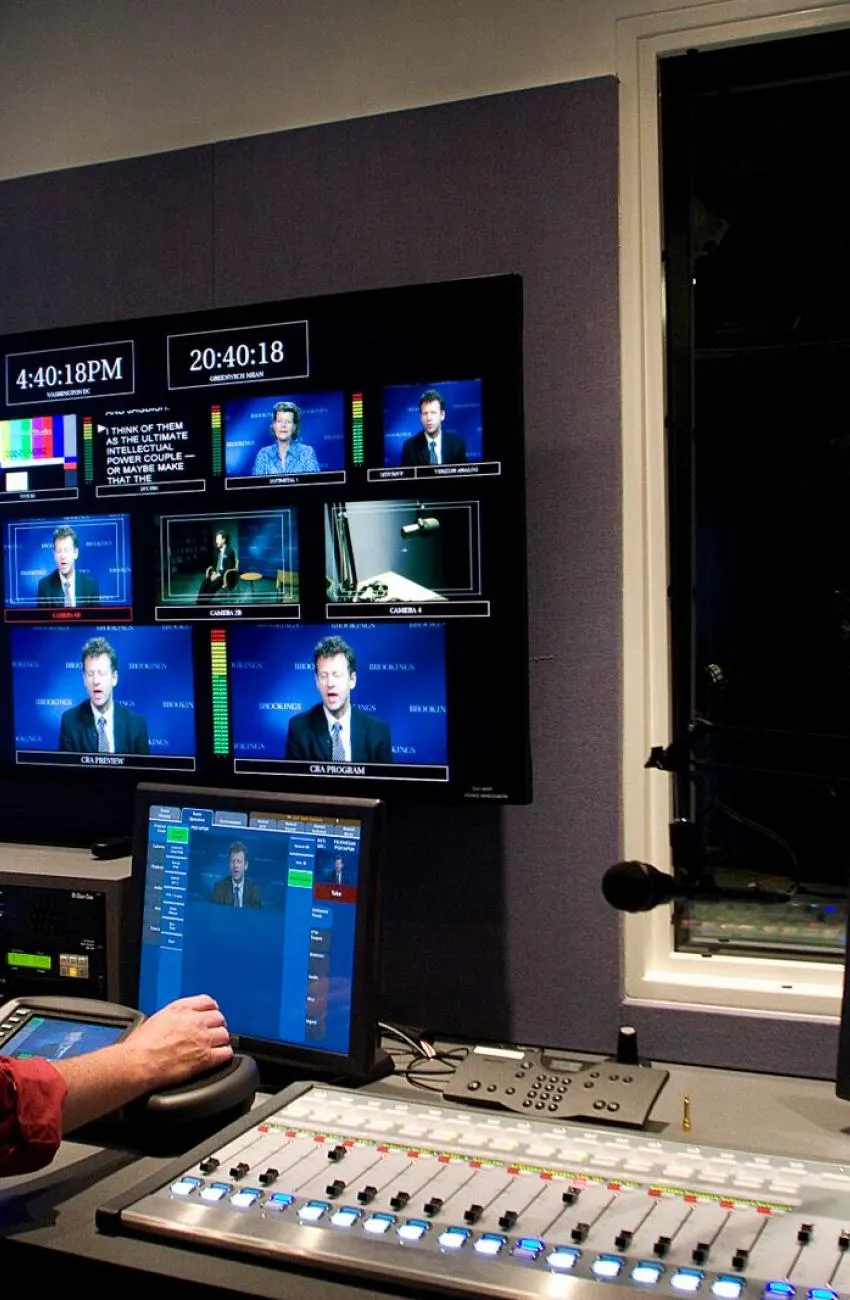 Photo: Brookings Institution, via www.lawsonarch.com
The framework's most ambitious promise involves the establishment of a new "Framework Assessment and Clarification Directorate," tasked with monitoring whether the current framework successfully explains previous frameworks while simultaneously developing the next framework to explain this one.
"We're already hard at work on the 2026 'Strategic Framework Integration Assessment,'" confirmed Morrison-Clarke. "It will provide crucial context for understanding why this framework needed to exist in the first place."
Implementation and Beyond
Implementation of the new framework will begin immediately with a six-month study to determine the optimal implementation strategy, followed by an eighteen-month assessment of implementation readiness, and concluding with a comprehensive review of why implementation has not yet begun.
Meanwhile, Pentagon procurement officials announced they have successfully reduced the cost of basic toilet seats to $547, representing what they describe as "tangible progress toward our strategic affordability objectives."
As one senior defense official noted, speaking on condition of anonymity, "At least we're consistent. We may not know what we're doing, but we're extremely good at explaining why we don't know what we're doing. And really, isn't that what strategic planning is all about?"