Congress Unites in Historic Vote to Investigate Why Congress Never Unites
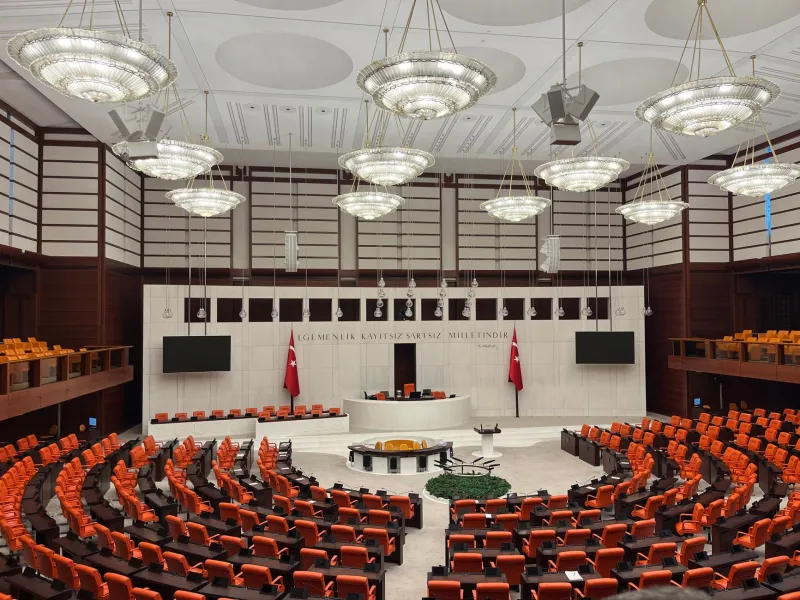
WASHINGTON — In what legislative historians are already calling "the most on-the-nose thing to happen in the history of American democracy," the United States Senate passed the Bipartisan Cooperation Assessment and Research Act on Tuesday by a vote of 74 to 26, with both parties praising the moment as proof that Washington can still function — while simultaneously providing abundant evidence that it cannot.
The bill, which allocates $43 million over three years to study the structural, psychological, and "vibes-based" reasons that collaborative legislation between Democrats and Republicans tends to dissolve into partisan trench warfare approximately eleven days after anyone calls it historic, was celebrated on the Senate floor with the kind of mutual backslapping not seen since the last bill everyone agreed to and then quietly dismantled in committee.
"Today," announced Senate Majority Leader Richard Pratt (D-OH), gripping a podium with both hands as though it might escape, "we prove that when Americans need answers, their government rises to the occasion. We are united. We are resolved. We will find out why we are never united or resolved."
Minority Leader Gerald Foss (R-TX) stood beside him nodding, in the manner of a man nodding.
A Study Born From Extensive Not-Studying
The impetus for the legislation traces back to a 2023 Government Accountability Office report — itself the product of a 2019 Senate resolution — which found that of the 214 bills passed with bipartisan support since 2001, approximately 97 percent had been effectively gutted, defunded, renamed, or simply ignored before their first annual review.
The remaining three percent, the report noted, concerned post office naming.
Rather than act on these findings, Congress commissioned a further study. That study recommended a legislative response. The legislative response is the bill passed Tuesday, which will fund a study. Congressional aides confirmed this is called "progress."
The research will be conducted by the newly created National Commission on Legislative Cooperation, a seventeen-member panel drawn from both parties, three major universities, and — in what one aide described as "a bold choice" — a conflict resolution firm that primarily handles divorces.
"We bring a unique perspective," said Dr. Pamela Ostroff, the firm's senior mediator, who was present at Tuesday's signing ceremony and appeared to be the only person in the room who had read the bill. "The dynamics here are remarkably similar to what we see in high-asset separations. Both parties entered the relationship with incompatible goals, communicate exclusively through press releases, and are primarily motivated by who gets the house."
She was not invited to the reception afterward.
Both Sides Privately Confident the Other Side Will Ruin It
Behind the scenes, the picture was somewhat less harmonious. Three Democratic staffers, speaking on condition of anonymity because their bosses were still in the photograph being taken for the press release, confirmed that the party's internal expectation is that Republicans will attempt to use the commission's findings to argue that bipartisanship fails because Democrats refuse to compromise.
Republican staffers, also speaking anonymously, said they fully anticipate Democrats will use the commission's findings to argue bipartisanship fails because Republicans refuse to compromise.
Both sets of staffers agreed that the commission's final report, due in 2027, will be 340 pages long, will conclude that the causes of partisan gridlock are "multifaceted and systemic," and will be released on a Friday afternoon in August.
Meanwhile, a betting pool has reportedly formed among Capitol Hill interns — entry fee $20, Venmo only — on the precise date the commission itself becomes partisan. The current favorite is March of next year. One particularly cynical intern has placed money on "before the first meeting adjourns."
"My money's on the seating arrangement," said one participant, who asked not to be named because she is technically an unpaid intern and therefore perhaps should not exist. "Someone's going to complain about the seating arrangement and it'll be downhill from there."
Experts Cautiously Optimistic, Then Less So
Political scientists contacted for comment offered a range of reactions spanning from "mildly bemused" to "professionally exhausted."
Dr. Howard Clemens, a professor of legislative behavior at Georgetown and author of the 2021 book Why They Don't: A History of Congressional Dysfunction, called the bill "a fascinating specimen."
"What we're seeing," he explained, "is Congress using bipartisan unity to study the absence of bipartisan unity, which is itself a form of bipartisan unity, which technically means the study has already succeeded before it has begun, which means they could defund it immediately and declare victory. They won't do that, of course. That would require agreement."
Asked whether he thought the commission would produce meaningful reform, Dr. Clemens paused for a long time.
"I think," he said carefully, "they will produce a very thorough PDF."
The Road Ahead
The commission is expected to hold its inaugural meeting in September, assuming both parties can agree on a location, a chair, a deputy chair, a definition of the word 'bipartisan,' and whether bottled water will be provided or whether members should bring their own.
Senator Pratt, asked at a press conference whether he was genuinely confident the commission would succeed where every previous cooperative effort had failed, smiled the smile of a man who has held office for nineteen years.
"I am," he said, "deeply optimistic."
He then walked directly into a separate press conference to accuse the other party of obstructing the legislative process.
The $43 million has already been allocated. The study will proceed. Nothing, experts broadly agree, will change — though they expect a very well-formatted report explaining exactly why.