Congress Bids Tearful Farewell to Senator Whose Greatest Achievement Was Consistently Showing Up to Lunch
The Senate chamber was unusually full on Thursday — an occasion so rare that three junior staffers reportedly ran to the window to check whether it was snowing — as colleagues assembled to honor the retirement of Senator Robert 'Bob' Calloway, who has represented his home state in the upper chamber for thirty-four years, and who, by most accounts, has been present for a portion of them.
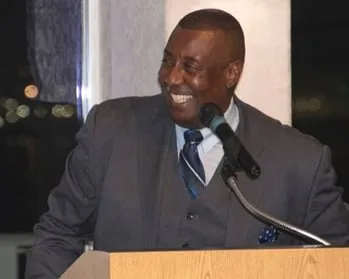 Photo: Senator Robert 'Bob' Calloway, via blog.psar.org
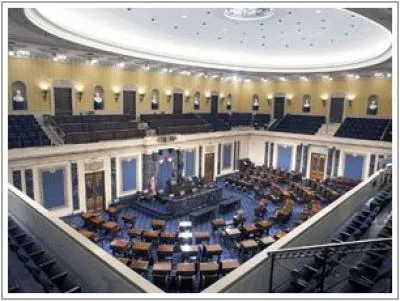 Photo: Senate chamber, via www.visitthecapitol.gov
'Bob is — he's just Bob,' said Senate Majority Leader Patricia Engel, pausing for what appeared to be a genuine attempt to think of something specific. 'He has always been here. In the building. You'd see him in the hall and he'd nod. That kind of consistency is rare in this town.'
Senator Calloway, 71, announced his retirement six months ago in a press release that described his tenure as 'a lifetime of dedicated service to the American people and to the committees, subcommittees, and working groups that form the backbone of our democratic process.' It did not name any of the committees. A follow-up inquiry to his office produced a list of eleven committees, four of which no longer exist.
A Career Measured in Attendance Records
The numbers, when examined carefully, tell the story of a man who approached public service with the focused energy of someone who had identified exactly which parts of the job were optional.
Senator Calloway voted in 71% of Senate floor votes over his career — a figure his office describes as 'a solid majority' and which places him in the bottom quartile of attendance among sitting senators. He missed, among other things, three votes on legislation he publicly claimed to support, two committee hearings on issues he described in press releases as 'my top priority,' and one vote that he missed because, according to contemporaneous reporting, he was at a golf invitational in Scottsdale sponsored by an energy company whose interests were directly implicated in the bill being voted on.
His attendance at catered Senate functions, however, was 94%. This figure — verified by cross-referencing Capitol catering manifests obtained through a Freedom of Information Act request that took four years to process — represents what his chief of staff, Donna Pressley, called 'a genuine commitment to being present where it matters.'
'Senator Calloway believes in showing up,' Pressley said. 'And he has. Consistently. To the lunches, the dinners, the holiday receptions, the bipartisan breakfast series — which, I should note, he helped establish, or at least attended every single one of.'
The Legislative Legacy: A Guided Tour
Over three decades, Senator Calloway sponsored 214 pieces of legislation. Of these, seven passed the full Senate. Of those seven, four were subsequently passed by the House and signed into law. Calloway's office provided a laminated summary of these four achievements, which Officially Absurd has reviewed in full.
The first was the Rural Postal Heritage Preservation Act of 2003, which renamed a post office in his home state after a local veteran. The second was an amendment to an existing agricultural bill that adjusted a grain storage subsidy formula by 0.3%, which Calloway's office described in a press release as 'a landmark victory for American farmers.' The third was a resolution declaring the third week of September as 'Infrastructure Awareness Week,' which carries no funding, no mandate, and no mechanism for anyone to do anything differently during the third week of September. The fourth was a bill renaming a different post office.
'He got things done,' said Senator Warren Holt, who has served alongside Calloway for sixteen years and who, when asked to name one of those things, said: 'The postal — there was a thing with a post office. Very meaningful to a lot of people in that community.'
The Farewell Speeches: A Study in Creative Vagueness
Fifteen senators delivered remarks on the floor in honor of Calloway's retirement. The speeches were, collectively, a masterwork of affectionate imprecision.
Senator Diane Chu called him 'a statesman in the truest sense, which is someone who has been here long enough to remember when things were different.' Senator Marcus Webb described him as 'the kind of senator who understood that sometimes the best thing you can do is be in the room.' Senator Ellen Farris said he was 'a man of profound conviction, which I witnessed personally on several occasions that I won't get into now but which were very impactful.'
Only one senator — freshman Democrat James Okonkwo of Ohio, who has been in Washington for eight months and has not yet learned which things you are not supposed to say — deviated from the script.
'I looked up Senator Calloway's record before coming today,' Okonkwo said, from the back of the chamber, in a tone that suggested he had not been warned about doing this. 'And I have a few questions. Not for the tribute. Just — for later. If someone has time.'
No one had time.
The Committees He Technically Served On
Perhaps the most distinguished element of Calloway's career was his membership on the Senate Committee on Environment and Public Works, which he joined in 2001 and on which he served, in an official capacity, for eleven years. Committee attendance records, which are public but stored in a format specifically designed to discourage anyone from looking at them, show that Calloway attended 23% of committee hearings during this period — a figure that drops to 14% if you exclude hearings that were catered.
He resigned from the committee in 2012 to join the Senate Special Committee on Aging, which he also did not attend very often, but which, as he noted in a statement at the time, 'deals with issues that are increasingly personal to me.'
'Bob was a vital presence on those committees,' said former committee chair Senator Howard Blaine, who struggled briefly when asked to confirm which committee he was referring to. 'Whichever ones he was on. He was vital on those.'
The Post-Senate Plans
Senator Calloway will not, his office confirms, be returning to private life in any meaningful sense. He has accepted a senior advisory position at a government relations firm — the name of which his spokesperson declined to provide — where he will serve as a 'Strategic Institutional Knowledge Partner,' a title that means he will have lunch with his former colleagues and remember things about them.
He will also join the board of two foundations, three think tanks, and a nonprofit dedicated to 'strengthening democratic institutions,' the primary activity of which appears to be hosting an annual gala.
'I'm not done serving,' Calloway told reporters at his farewell press conference, visibly emotional in the way of a man who has been told by a communications consultant to appear visibly emotional. 'This country gave me thirty-four years. I gave it everything I had.'
He paused.
'Almost everything,' he added. 'I kept some for myself. You have to. It's a long career.'
A post office in his home state will be renamed in his honor next spring. It is the third post office named after him. He renamed the first one himself.