Bill Nobody Read Becomes Law in Eleven Days Because the Word 'Children' Was in the Title

Bill Nobody Read Becomes Law in Eleven Days Because the Word 'Children' Was in the Title
WASHINGTON — On a Tuesday morning that will likely go unexamined by historians, the American Children's Future Opportunity and Patriot Investment Renewal Act was signed into law by the President in a ceremony featuring a small child holding an American flag and a cake with the word "PROGRESS" written on it in blue frosting. The bill had passed the House 435 to 0 and the Senate 100 to 0. It had been introduced eleven days earlier. No member of either chamber has confirmed reading it in full. One senator, asked directly, said he had read "the title and most of the summary, which was very moving."
The bill is 1,143 pages long. Page 847 contains Subsection 44(c)(ii), which leases 340,000 acres of a federally protected national park in Wyoming to a Luxembourg-registered minerals extraction company called Terralux Consolidated Holdings S.A. for a period of ninety-nine years at an annual rate of one dollar.
The cake was chocolate.
The Origin Story
The American Children's Future Opportunity and Patriot Investment Renewal Act — referred to in congressional shorthand as ACFOPIRA, which no one can pronounce and no one has tried — originated, as investigators would later piece together, on a laptop belonging to a K Street lobbyist named Trevor, whose last name has not been reported because three separate outlets reached out to him and he simply did not respond.
Trevor, according to two sources familiar with the matter, had been attempting for eighteen months to advance a package of regulatory changes, mineral rights adjustments, and federal land reclassifications on behalf of a portfolio of clients whose industries span extraction, infrastructure, and what one source described as "the kind of consulting that is technically legal but requires a very specific kind of personality."
None of these efforts had gained traction. The regulatory package was too specific. The land reclassification language was too visible. The mineral rights provisions kept attracting the attention of the Interior Department's legal office, which Trevor found inconvenient.
In late January, according to those same sources, Trevor had a conversation with a congressional staffer that one participant has described as "a eureka moment" and the other has described as "I really should have asked more questions."
The solution, it turned out, was children.
The Naming Strategy
"There is a documented, bipartisan, fully consistent pattern in Congress," explained Dr. Renata Howell, a political scientist at American University who studies legislative behavior and has clearly seen some things. "If a bill's title contains the words 'children,' 'veterans,' 'families,' or 'puppies' — and yes, I have a dataset on puppies — it receives statistically significant reductions in scrutiny, increased co-sponsorship within forty-eight hours, and near-universal floor support regardless of content."
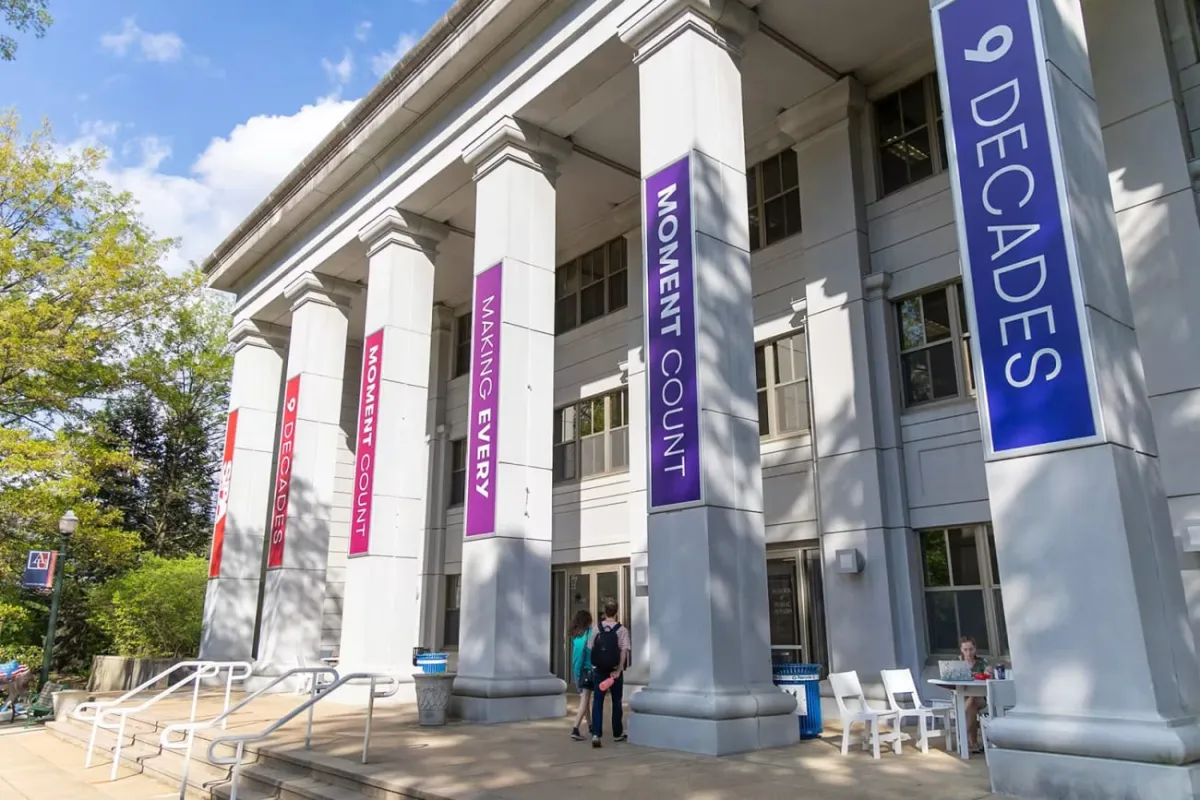 Photo: American University, via keystoneacademic-res.cloudinary.com
She paused. "The word 'patriot' adds approximately fifteen percent more votes. The word 'future' adds twelve. Combining them is, from a purely technical standpoint, very effective legislation design."
ACFOPIRA's full title — American Children's Future Opportunity and Patriot Investment Renewal Act — tests at what Dr. Howell's research model rates as a 94th-percentile "title safety score," meaning it is safer to vote for, purely on the basis of its name, than 94 percent of all legislation introduced in the past thirty years.
"Nobody was going to vote against American children's future opportunities," said a House Democratic staffer who requested anonymity. "You might as well vote against the sun."
Eleven Days
The bill was introduced on a Monday by Representative Charles Fenn (R-WY), who told reporters it was "a commonsense investment in the next generation." By Wednesday it had forty-seven co-sponsors from both parties. By Friday it had cleared committee — a committee that, according to its own chairwoman, spent the hearing discussing a different bill and approved ACFOPIRA "by unanimous consent at the end, which is standard practice for non-controversial items."
It passed the full House the following Tuesday, 435 to 0, in a session that lasted twenty-two minutes. The floor debate, such as it was, consisted of four members giving ninety-second speeches praising the concept of children and one member praising the concept of patriotism. No member cited a specific provision.
The Senate passed it four days later, also unanimously, after Majority Leader scheduling staff described it as "a clean bill" in the weekly digest. Two senators gave floor speeches. Both mentioned their grandchildren. Neither mentioned Wyoming.
The President signed it on a Thursday. The White House press release described it as "a landmark investment in America's most important resource: our kids."
The White House press office did not respond to a question about Subsection 44(c)(ii).
Page 847
The subsection was first identified by a paralegal at a nonprofit land conservation group who was reviewing the bill's appendices for unrelated reasons and described the discovery in a staff memo as "not ideal."
Subsection 44(c)(ii), titled "Mineral Resource Optimization and Federal Land Partnership Facilitation Provisions," authorizes the Interior Department to enter into a long-term land use agreement with any "qualified international infrastructure investment partner" for the purposes of "resource development in support of domestic economic renewal priorities." A definition section on page 1,089 clarifies that "qualified international infrastructure investment partner" means any entity registered in a country with which the United States has a bilateral trade agreement — which includes Luxembourg — with assets exceeding $500 million.
Terralux Consolidated Holdings S.A. was incorporated in Luxembourg fourteen months ago. Its listed assets are $501 million. Its registered address is a mailbox service in the Grand Duchy's capital. Its website, as of press time, contains one page with a logo and the phrase "Committed to Tomorrow."
Representative Fenn's office issued a statement saying the congressman was "reviewing the provision" and that any suggestion of impropriety was "baseless and politically motivated." The statement did not address whether he had read the bill before introducing it.
Democracy, Functioning
"The remarkable thing," said Dr. Howell, when presented with the full account, "is that this is democracy functioning largely as intended. The system worked. A bill was introduced, debated — loosely — passed, and signed. The mechanisms operated correctly. That is, in some ways, the most alarming part."
She noted that Congress passes roughly two to three hundred bills per session. Studies suggest members read, in their entirety, somewhere between twelve and forty percent of those bills. The remainder pass on the basis of staff summaries, party guidance, committee recommendations, and, in an unknown but non-trivial number of cases, whether the title sounds like something a reasonable person could vote against.
"Nobody wants to be the senator who voted against children's future opportunities," she said. "That's a thirty-second attack ad that writes itself."
A coalition of conservation groups has filed suit challenging Subsection 44(c)(ii) on constitutional grounds. The case is expected to take three to five years. In the meantime, Terralux Consolidated Holdings S.A. has submitted its first annual payment to the Interior Department.
One dollar, by wire transfer, from Luxembourg.
The White House cake, sources confirmed, was very good.