Congressional Productivity Skyrockets During Extended Vacation Schedule
The Accidental Discovery
Representative Jake Morrison arrived in Washington last January with a briefcase full of policy proposals and the naive assumption that Congress actually worked during work days. Six months later, he's made a startling discovery that veteran lawmakers have quietly understood for decades: America's most productive legislators are the ones who aren't technically present.
"I spent my first month wondering why the Capitol building felt like a ghost town," Morrison explained during a phone interview from his district office in Ohio. "Then I realized we weren't supposed to be there. That's when things started making sense."
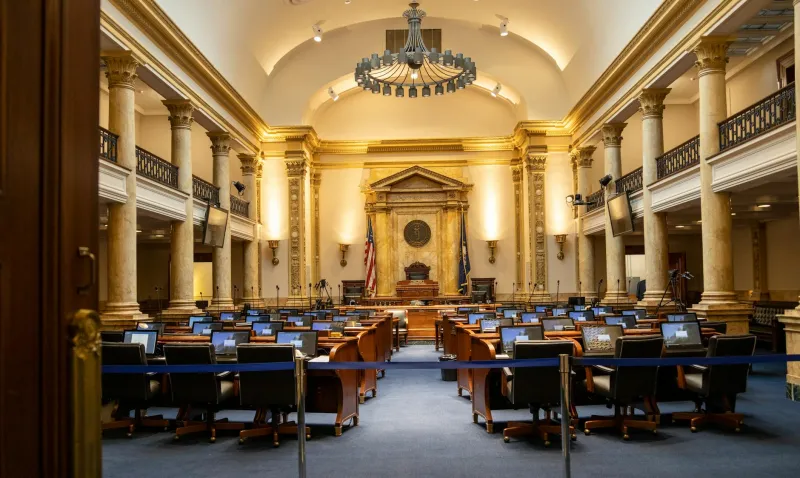
 Photo: Capitol building, via dosgames.ru
Morrison's revelation came after noticing that his most significant legislative achievements occurred during official recess periods, when he was legally prohibited from being in Washington.
The Mathematics of Absence
According to the Congressional Calendar Optimization Institute, the House of Representatives maintains an official schedule of 147 working days per year, which sounds impressive until compared with the 365 days that actually exist. This means Congress operates at roughly 40% capacity, assuming perfect attendance during designated work periods.
"Most Americans don't realize that their representatives work fewer days than a part-time barista at Starbucks," noted scheduling analyst Dr. Patricia Williams. "But our research shows this might actually be optimal for democratic governance."
Williams' team has tracked legislative output over the past decade, discovering an inverse correlation between congressional presence and meaningful accomplishment. "The data is remarkably consistent," she observed. "The longer Congress stays away from Washington, the more satisfied their constituents become."
Freshman Orientation
Morrison's education in legislative reality began during his first committee assignment: the Subcommittee on Commemorative Coin Design Standards. "I thought we'd be tackling healthcare reform or infrastructure investment," he recalled. "Instead, I spent three weeks debating whether the buffalo on the Montana quarter was facing the wrong direction."
The subcommittee's most heated deliberation centered on selecting appropriate fonts for a resolution declaring March 15th as National Pretzel Appreciation Day. "We held four separate hearings on serif versus sans-serif typography," Morrison noted. "The final vote was 7-6 in favor of Times New Roman, with two abstentions."
Committee Chair Representative Sandra Kellerman defended the font selection process as "essential democratic deliberation." She explained that typographical choices carry profound constitutional implications that require extensive expert testimony and public comment periods.
The Recess Revelation
Morrison's breakthrough moment occurred during the August recess, when he accidentally accomplished more legislative work than during his previous six months in Washington. While visiting a veterans' hospital in Cleveland, he met with local officials and drafted preliminary language for three separate bills addressing healthcare access, job training, and infrastructure maintenance.
"I wasn't even supposed to be working," he explained. "But when you're not surrounded by parliamentary procedure specialists and budget reconciliation experts, you can actually talk to people about their problems."
During the same two-week period, Morrison organized town halls in four districts, conducted site visits at three manufacturing facilities, and held substantive policy discussions with twelve mayors. His Washington-based colleagues, meanwhile, spent the recess attending fundraising events and strategic planning retreats.
Expert Consultation
The Congressional Efficiency Research Foundation has studied optimal legislative scheduling for over two decades. Director Dr. Michael Harrison suggests that current congressional calendars might actually represent excessive government activity.
"Our modeling indicates that reducing the official work year to approximately 72 hours could maximize democratic outcomes," Harrison explained during a video conference from his Arlington office. "Most meaningful legislation requires extensive contemplation, which occurs more naturally during extended absence periods."
Harrison's team has developed sophisticated algorithms to determine ideal lawmaker-to-constituent ratios. "The sweet spot appears to be one representative per 750,000 citizens, working approximately 14 days per year," he noted. "This allows for adequate representation without excessive governance."
Veteran Perspective
Twenty-year congressional veteran Representative Maria Gonzalez offered historical context for Morrison's discoveries. "Every freshman goes through this adjustment period," she observed while reviewing constituent mail in her San Antonio office. "They arrive expecting to pass laws and solve problems. Eventually, they learn that our most important function is staying out of the way."
Gonzalez pointed out that Congress's most significant achievements often occur during crisis periods when normal scheduling breaks down. "We passed the Civil Rights Act during an extended emergency session," she noted. "The Interstate Highway System was approved during a budget crisis. Major legislation requires disrupting our regular calendar."
Scheduling Innovation
The House Administration Committee recently commissioned a study to optimize congressional productivity through calendar reform. Preliminary recommendations suggest consolidating all legislative activity into quarterly three-day weekends, with the remainder of the year designated as "constituent engagement periods."
"This approach would formalize what already happens informally," explained committee staff director Jennifer Walsh. "Representatives could focus on actual governing during concentrated work sessions, then spend adequate time in their districts learning what needs to be governed."
Walsh's proposal includes provisions for emergency sessions during genuine crises, defined as situations requiring immediate federal intervention rather than extended committee deliberation.
Constituent Response
Morrison's constituents have responded positively to his extended absence from Washington. "He's been more accessible since Congress went on recess," noted Youngstown resident Carol Peterson. "When he's in D.C., we get form letters from his staff. When he's home, we actually talk to him."
Local business owner David Chen agreed: "I prefer when Congress isn't in session. Nothing good ever comes from politicians having too much time on their hands."
Future Implications
Morrison plans to introduce legislation formalizing extended recess periods as official congressional policy. "If we're going to be more effective while absent, we should embrace that reality," he argued. "Why pretend we need to be in Washington when the evidence suggests otherwise?"
The bill, tentatively titled the "Congressional Efficiency Through Strategic Absence Act," would reduce official working days to 89 per year while expanding constituent engagement requirements.
"American democracy might work better when its representatives spend more time with actual Americans," Morrison concluded. "It's a radical concept, but the data supports it."